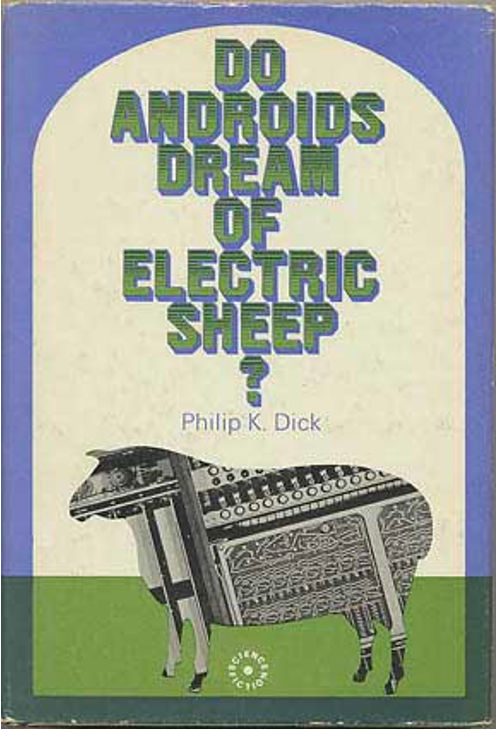
Resurrecting species through robotics : Animal extinction and deextinction in Do androids dream of electric sheep?

Philip K. Dick’s Do Androids Dream of Electric Sheep? (1968) is often understood as commentary on what it means to be human contra android. Less work has been done on animals in the novel, probably because the animal aspect was downplayed significantly in the movie version Blade Runner (1982), an …


Coda on Curation: Thoughts on Science Fiction and Museums

An encounter in a museum—viewing objects in a display case or a wall filled with art—is always an encounter with curation. Science fiction gives insights into the power inherent in the curator’s role. Although curators are scarce in science fiction, one major science fiction character who is deliberately positioned by …

Dependence on the whale: multispecies entanglements and ecosystem services in science fiction

Abstract: This article analyses how four science fiction stories frame whale endangerment and salvation as a problem of ecosystem service loss: Arthur C. Clarke’s The Deep Range (1957), Star Trek IV: The Voyage Home (1986), the Doctor Who episode ‘The Beast Below’ (2010), and T.J. Bass’s The Godwhale(1974). It uses the four categories of the scientific concept …

Remembering the past for the future: The function of museums in science fiction time travel narratives

In Time Travel in Popular Media: Essays on Film, Television, Literature and Video Games, ed. Matthew Jones and Joan Ormrod, 118–131. Jefferson, NC: McFarland, 2015. Science fiction as a genre has often invoked museum settings as windows into the past, as places of memories. How does that function when a science fiction …

A Blueprint for Destruction: Eco-activism in Doctor Who during the 1970s

Ecozon@: European Journal of Literature, Culture and Environment 3, no. 2 (2012):[online] This article analyzes the television science-fiction show Doctor Who as a cultural forum within the context of British eco-activism of the 1970s. It examines four serials which aired during the 1970s during the first wave of eco-activism in the …

Who’s the devil? Species extinction and environmentalist thought in Star Trek

During the last decades of the 20th century, the environmentalist movement came of age. As it developed into a mass movement, it gradually changed its arguments and strategies for persuading the public that endangered species were worth saving. Although depicting a universe two hundred years (and more) into the future, …

Back to Top