
My post-doctoral project titled “Sea Stories: Constructing Nature in the Rigs-to-Reefs Debate” was an examination of the modern history of the Rigs-to-Reefs program in which decommissioned oil and gas offshore platform jackets are converted into artificial reefs. In this project, I examined the scientific and political controversies surrounding Rigs-to-Reefs since the mid-1970s in the Gulf of Mexico, California Bight and North Sea. By analyzing the historical development of artificial coral reef research in conjunction with political and business discussions about offshore disposal of oil structures, the project hopes to shed light on why policies have developed differently in the three areas. I am particularly interested in how a combination of science, politics, economics, and culture work together to define what is “natural.”
- Artifacts and habitats
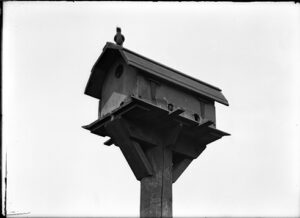 Abstract: Humans see distinctions between artifacts, which are constructed by human hands with human ingenuity, and nature, which we tend to think of as somehow not made by humans even if we acknowledge that little nature is left untouched by humans. An artifact at its core is related to the word artificial, meaning made by …
 - Mixing oil and water: naturalizing offshore oil platforms in American aquariumsIn Oil Culture, ed. D. Worden and R. Barrett, 267-288. Minneapolis: University of Minnesota Press, 2014. To examine the integration of oil and ocean, this essay analyzes depictions of offshore ecosystems in American aquarium displays owned by a variety of organizations, ranging from commercial restaurant chains to nonprofit environmentally focused organizations. The essay will argue …
- The Palm Islands, Dubai, UAE
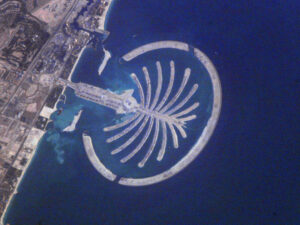 Nothing seems more unnatural than a manmade island shaped like a palm tree, an act of artifice, of design, on a massive scale. Yet when the Sheikh of Dubai decided to invest in such a scheme, naturalness was foremost in his thoughts. As if the technological challenges of creating the largest manmade island in the …
 - Lophelia pertusa conservation in the North Sea using obsolete offshore structures as artificial reefsMarine Ecology Progress Series 516 (2014): 275-280. Authors: Paulina Bergmark and Dolly Jørgensen ABSTRACT: Deep-water coral reefs are classified as vulnerable marine ecosystems, with trawling identified as the primary cause of reef destruction. Lophelia pertusa is the main reef-building species in deep-water coral reefs. In addition to occurring on natural hard substrates, the species has been …
- Oasis in a Watery Desert lectureI had the privilege to give a lecture on November 4, 2014, as part of the 2014 Sagan National Colloquium Water in World at Ohio Wesleyan University (USA). The video of the lecture titled “Oasis in a Watery Desert” is available online.
Pingback: Ohio Wesleyan Dives Into Exploration Of “Water In Our World”