Forest‒Stream Linkages, Anthropogenic Stressors and Climate Change: Implications for Restoration Planning

The global extraction of forest and water resources has led to habitat degradation, biodiversity loss, and declines in ecosystem services. As a consequence, ecological restoration has become a global priority. Restoration efforts to offset this trend, however, are not always effective. One reason is that many restoration projects target single …
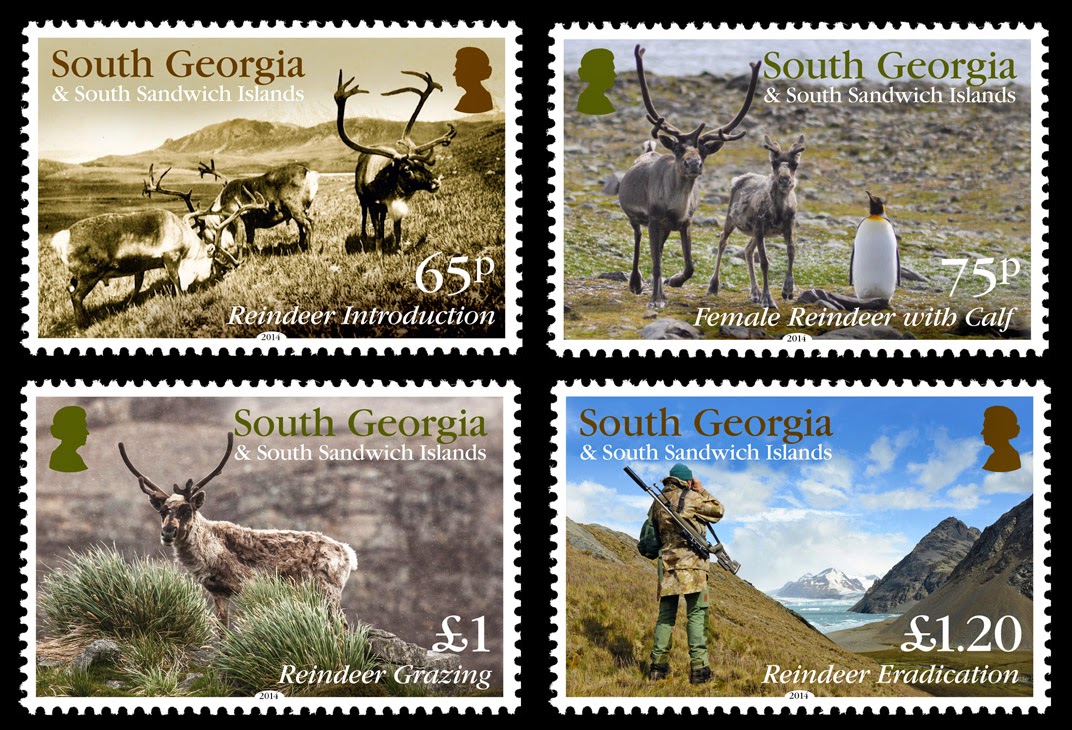
Animals as instruments of Norwegian imperial authority in the interwar Arctic

During the first half of the twentieth century a number of individuals in Norway participated in the transfer of animals from both the Arctic to the Antarctic regions and vice versa. These projects may be conceptualized as a form of imperial acclimatization, following in the footsteps of earlier attempts to …

Forest restoration to attract a putative umbrella species, the white-backed woodpecker, benefited saproxylic beetles

David Bell, Joakim Hjältén, Christer Nilsson, Dolly Jørgensen, Therese Johansson Ecosphere 6, no. 12: [online]. DOI: 10.1890/ES14-00551.1  [Open Access] Umbrella species are often spatially demanding and have limited ability to adapt to environmental changes induced by human land-use. This makes them vulnerable to human encroachment. In Sweden, broadleaved trees are disadvantaged by forestry, and commercially managed …

Ecological restoration as objective, target and tool in international biodiversity policy

Ecological restoration as objective, target and tool in international biodiversity policy. Ecology and Society 20, no. 2 (2015):43. http://dx.doi.org/10.5751/ES-08149-200443 [Open Access] Ecological restoration has been mainstreamed in international biodiversity policies in the last five years. I analyze statements about restoration in three international policies: the Convention for Biodiversity Strategic Plan 2011-2020 and …

Muskox in a box

Muskox in a Box and Other Tales of Containers as Domesticating Mediators in Animal Relocation, in Animal Housing and Human–Animal Relations: Politics, Practices and Infrastructures, ed. Kristian Bjørkdahl and Tone Druglitrø, 100-114 (Routledge, 2016) Using three short tales of animal relocation in Norway and Sweden from 1900 to 2013, I argue that the boxes used …

Migrant muskoxen and the naturalization of national identity in Scandinavia

In The Historical Animal, ed. S. Nance (Syracuse University Press, 2015), 184-201. This chapter takes as its departure point studies of human migration, which have received a lot of attention in the past decade. Scholars have been interested in understanding the push/pull forces behind human migrations, whether they are willing or …

Rethinking rewilding

Geoforum, 65 (Oct 2015): 482-488, doi://10.1016/j.geoforum.2014.11.016 Abstract: The term ‘rewilding’ sounds as if it should have a straightforward meaning ‘to make wild again’. But in truth the term has a complex history and a host of meanings have been ascribed to it. Rewilding as a specific scientific term has its …

Time for recovery of riparian plants in restored northern Swedish streams: a chronosequence study

Ecological Applications 25(5): 1373-1389. http://dx.doi.org/10.1890/14-1102.1 authors: EM Hasselquist, C Nilsson, J Hjältén, D Jørgensen, L Lind, and LE Polvi The first author of this paper is a PhD student whom I co-supervised at Umeå University. Abstract: A lack of ecological responses in stream restoration projects has been prevalent throughout recent literature with …

Conservation implications of parasite co-reintroduction

Conservation Biology 29, no 2 (April 2015): 602-605. Parasites with a high degree of host specificity may have extinction rates similar to their avian and mammalian hosts thus warrant attention from conservation biologists. During reintroduction and other translocation projects, typically little thought has been given to whether or not a parasite …

Pigs and pollards – medieval insights for UK wood pasture restoration

English wood pastures have become a target for ecological restoration, including the restoration of pollarded trees and grazing animals, although pigs have not been frequently incorporated into wood pasture restoration schemes. Because wood pastures are cultural landscapes, created through the interaction of natural processes and human practices, a historical perspective …

Back to Top