Muskox in a box

Muskox in a Box and Other Tales of Containers as Domesticating Mediators in Animal Relocation, in Animal Housing and Human–Animal Relations: Politics, Practices and Infrastructures, ed. Kristian Bjørkdahl and Tone Druglitrø, 100-114 (Routledge, 2016) Using three short tales of animal relocation in Norway and Sweden from 1900 to 2013, I argue that the boxes used …
History for a sustainable future

I gave a presentation titled ‘History for a sustainable future’ for a group of parliamentary representatives and researchers in the Sällskapet Riksdagsledamöter och Forskare (RIFO) as part of a seminar on environmental humanities on 14 October 2015. My talk stressed the need to incorporate environmental history and historical research into the environmental policy process. …

Migrant muskoxen and the naturalization of national identity in Scandinavia

In The Historical Animal, ed. S. Nance (Syracuse University Press, 2015), 184-201. This chapter takes as its departure point studies of human migration, which have received a lot of attention in the past decade. Scholars have been interested in understanding the push/pull forces behind human migrations, whether they are willing or …

Mixing oil and water: naturalizing offshore oil platforms in American aquariums

In Oil Culture, ed. D. Worden and R. Barrett, 267-288. Minneapolis: University of Minnesota Press, 2014. To examine the integration of oil and ocean, this essay analyzes depictions of offshore ecosystems in American aquarium displays owned by a variety of organizations, ranging from commercial restaurant chains to nonprofit environmentally focused …

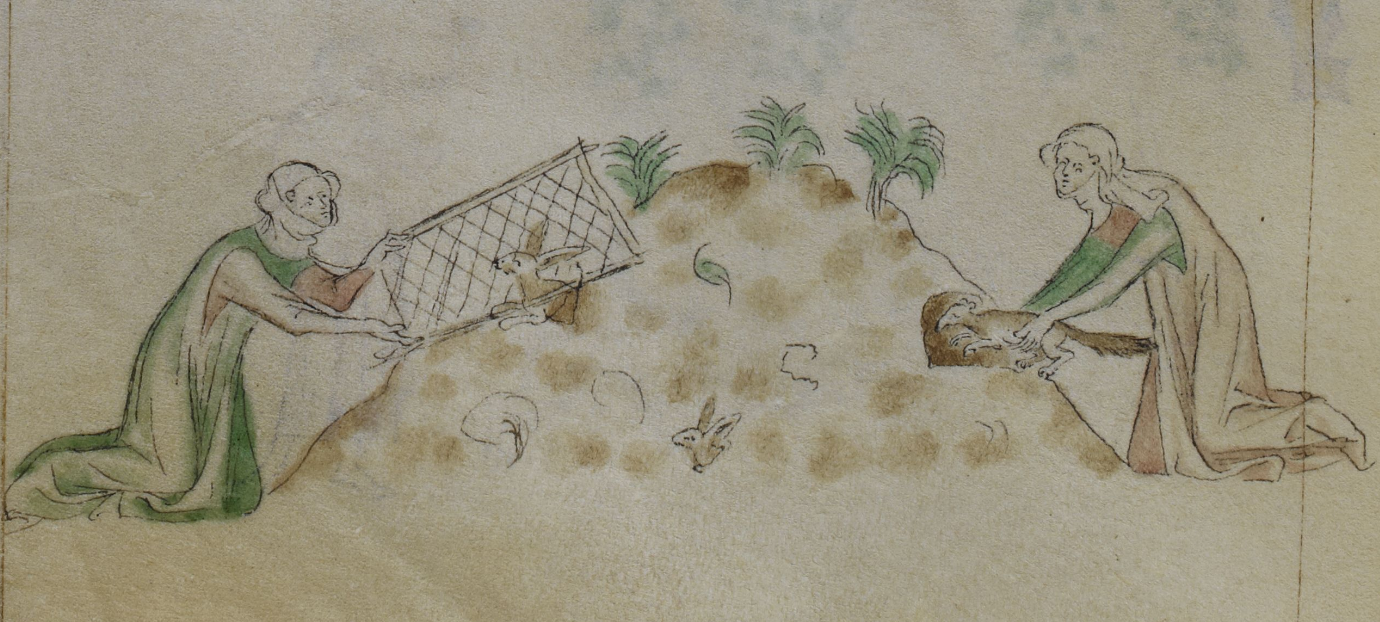
Illuminating Ephemeral Medieval Agricultural History through Manuscript Art

There are objects and practices we would not know existed if we relied only on written texts or archeological evidence to piece together medieval agricultural history. These ephemeral aspects of the agricultural past are sometimes, however, captured in art. This essay explores some of the possible ways to recover fleeting …

Lophelia pertusa conservation in the North Sea using obsolete offshore structures as artificial reefs

Marine Ecology Progress Series 516 (2014): 275-280. Authors: Paulina Bergmark and Dolly Jørgensen ABSTRACT: Deep-water coral reefs are classified as vulnerable marine ecosystems, with trawling identified as the primary cause of reef destruction. Lophelia pertusa is the main reef-building species in deep-water coral reefs. In addition to occurring on natural hard …

Rethinking rewilding

Geoforum, 65 (Oct 2015): 482-488, doi://10.1016/j.geoforum.2014.11.016 Abstract: The term ‘rewilding’ sounds as if it should have a straightforward meaning ‘to make wild again’. But in truth the term has a complex history and a host of meanings have been ascribed to it. Rewilding as a specific scientific term has its …

Time for recovery of riparian plants in restored northern Swedish streams: a chronosequence study

Ecological Applications 25(5): 1373-1389. http://dx.doi.org/10.1890/14-1102.1 authors: EM Hasselquist, C Nilsson, J Hjältén, D Jørgensen, L Lind, and LE Polvi The first author of this paper is a PhD student whom I co-supervised at Umeå University. Abstract: A lack of ecological responses in stream restoration projects has been prevalent throughout recent literature with …

Back to Top